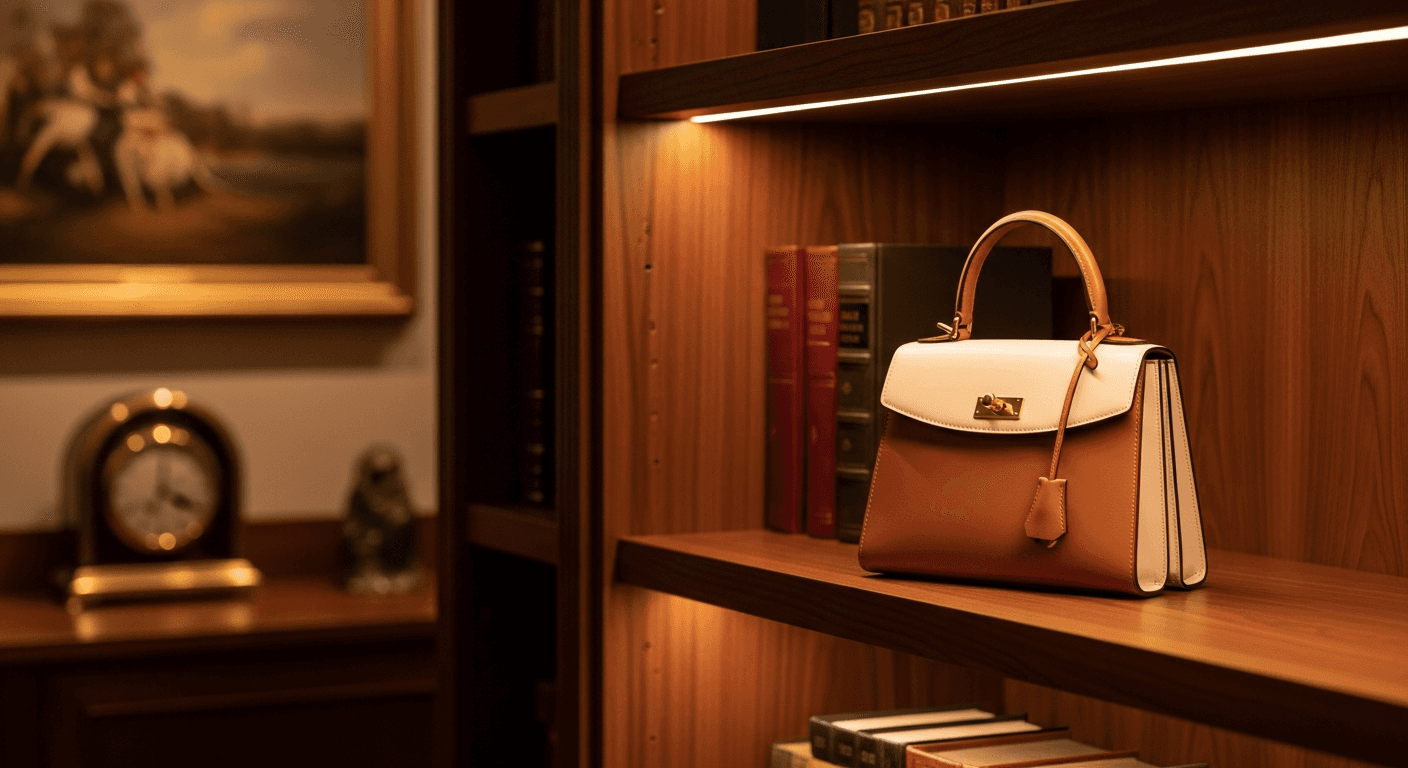
Why Luxury Handbags Are Becoming a Serious Part of Wealth Preservation
Kristi Caudell, Founder, Lux Exclusives
The conversation surrounding luxury handbags has shifted decisively over the last decade. What was once treated almost entirely as fashion is now recognized by sophisticated collectors, family offices, and wealth advisors as a category capable of holding long term value when properly authenticated, documented, and preserved. Iconic pieces from Hermès, Chanel, and a small handful of heritage houses are increasingly discussed alongside fine art, rare watches, jewelry, and collectible automobiles as tangible assets within broader wealth preservation strategy.
This shift is not driven by cultural trend. It reflects a deeper evolution in how affluent individuals think about ownership, privacy, and the long term preservation of value.
From Fashion to Asset Class
A handful of pieces — most notably the Hermès Birkin and Kelly, and to a lesser degree the Chanel Classic Flap — have moved into a category that few luxury items ever reach. They trade on the global secondary market at or above retail pricing, anchor dedicated auction departments at Sotheby's and Christie's, and have been tracked as a discrete category within the Knight Frank Luxury Investment Index alongside art, watches, wine, jewelry, classic cars, and rare whisky.
The drivers are structural rather than cyclical. Heritage houses produce these pieces at deliberately constrained volumes. Hermès does not publish production figures, but widely cited analyst estimates place annual Birkin output at roughly 70,000 to 120,000 units globally — an unusually disciplined level of supply for a brand at this scale of revenue. Combined with stable cultural meaning over multiple decades, that scarcity is what transforms a handbag from an accessory into a long term asset.
What Makes the Category Function as a Wealth Preservation Asset
The pieces that consistently retain or appreciate in value share four conditions: durable cultural significance, controlled production, transparent and well-developed secondary infrastructure, and the physical durability to be stored, transferred across generations, and authenticated decades after manufacture. Heritage houses with century-long brand continuity satisfy all four. Most contemporary luxury labels satisfy none.
This is the same logic that explains why a 1962 Patek Philippe Calatrava holds value over fifty years and a new entrant rarely does, and why a Picasso study underwrites a wealth transfer plan in ways that a contemporary print typically cannot. Provenance, scarcity, and the structural integrity of the secondary market are the underlying mechanics. Handbags from a narrow set of houses now satisfy those same mechanics, which is the reason they are appearing more frequently in conversations alongside other tangible assets within UHNW portfolio planning.
Why Sophisticated Owners Now Treat Handbags Like Other Tangible Assets
Today's collector is far more intentional about acquisition. The defining behavior is no longer the purchase. It is the discipline that surrounds it.
What matters equally is provenance documentation, original receipts and box, condition records, periodic valuation, and the operational ability to manage an entire collection privately within a trusted environment. A piece without authentication records, documented provenance, or proper preservation can lose meaningful market position over time, regardless of the brand on the leather. Documentation matters. Condition matters. Privacy matters.
This is the same operational discipline that has long defined fine art and watch ownership at the highest levels. It is now becoming standard practice across heritage handbags as well, particularly within family office collections and among collectors who hold multiple pieces across decades.
The Discipline of Modern Luxury Ownership
At the highest levels of wealth, ownership has rarely been about excess. It has been about access, rarity, preservation, and discernment.
Family offices, in particular, have brought institutional discipline to a category that historically lacked it. Authentication records are maintained the way share certificates once were. Insurance schedules are updated against current market comparables, not original retail. Storage environments match the relative humidity and light specifications used in private art collections. Valuation visibility — knowing what a collection is actually worth at any given moment rather than what was paid for it — is increasingly treated as a baseline expectation rather than an annual exercise.
That discipline is what separates a collection that compounds in value across a generation from one that quietly erodes through neglect.
Where Private Infrastructure Has Begun to Catch Up
As collectible handbags have continued to appreciate in cultural and financial significance, the infrastructure surrounding ownership has not always kept pace. Spreadsheets, shoeboxes of receipts, and disconnected appraisals are not adequate scaffolding for assets routinely valued in the six and seven figures.
Lux Exclusives was developed for this evolution. Through its private marketplace and Vault ecosystem, members can manage luxury handbags alongside other tangible assets — including jewelry, fine art, real estate, yachts, aviation, and collectibles — within a centralized environment designed for authentication, valuation tracking, portfolio visibility, and intelligent asset stewardship.
It is not a public marketplace built around mass visibility. It is the discreet, wealth-adjacent infrastructure that this category should have had all along.
The Direction of the Market
As luxury and wealth continue to intersect, the handbag conversation is no longer about fashion. It is about stewardship.
Owners who recognize that distinction early will be positioned differently in the decade ahead. The collections that compound — financially, culturally, generationally — will be the ones managed with intention. Authenticated. Documented. Preserved. Held within infrastructure designed for the way luxury ownership is actually evolving rather than the way it once was.
That is the future of luxury ownership. It is quieter than the past, and considerably more deliberate.
Explore the future of private luxury asset ownership at luxexclusives.com.
Kristi Caudell
Founder, Lux Exclusives
706.799.2188 | kristi@luxexclusives.com | luxexclusives.com

© 2025 Lux Exclusives All Rights Reserved